.jpg)
Reports of the New World screwworm returning after 44 years have raised concern. Whi le ranchers and veterinarians know the parasite as a threat to cattle, the idea of a flesh-eating fly larva raises questions about potential impacts to humans.
To help answer these questions, we spoke with three experts at Texas A& M Health: Loni Taylor, PhD, DVM, MPH, an interdisciplinary veterinary epidemiologist and director of the Center for Worker Health; Anabel Rodriguez, PhD, MPH, an occupational epidemiologist and assistant professor; and Moriya Tsuji, MD, PhD, a professor and renowned infectious disease researcher.
What is a screwworm, and why are people talking about it again?
Despite the name, a New World screwworm isn’t a worm at all; it’s the destructive larval stage of a parasitic blow fly.
The United States eradicated the pest in the early- 1980s using the sterile insect technique, which involved releasing millions of sterile male flies to mate with wild females and crash the wild population, in addition to monitoring and animal treatments.
“Many clinicians, practicing in areas that have been free of screwworm for decades, have never encountered a human case,” Taylor said. “We need to educate both patients with chronic wounds and healthcare providers who might not recognize the risks to their clientele.”
Can you “catch” screwworms from eating meat?
No, screwworms are strictly external parasites that require a living host with an open skin break to survive, according to the USDA. They cannot survive the human digestive tract, nor are they transmitted through food. They do not move between hosts, and they do not survive on dead hosts, as other blow fly species do. They can only infest a living animal by the female laying eggs in the wound.
Is this just a livestock problem, or are humans at risk, too?
Screwworms primarily infect livestock and wildlife, but screwworm flies will lay eggs quickly in any open wound—including minor scratches—on both animals and humans, according to Cleveland Clinic.
Taylor explained that three groups of people face the highest risk in an active outbreak area: agricultural and outdoor workers, individuals with chronic wounds, and homeless and vulnerable individuals.
How can you tell the difference between a normal infected cut and a screwworm infestation?
Tsuji noted several red flags to watch for: severe and sharp pain, worsening appearance, unusual fluid and visible movement.
“If you see a wound that isn’t closing and you’re seeing larvae, go to a medical provider immediately and tell them what you’re experiencing,” Rodriguez said.
Can you treat a screwworm infestation at home?
Seek medical attention as soon as you suspect a screwworm infestation. Attempting home remedies, suffocating the larvae with household liquids, or pulling them out manually with tweezers is dangerous, according to the Texas A&M AgriLife Extension Service.
Knowing where you were when you were wounded or when you think you may have obtained the infestation can help agencies respond to eliminate the flies in the environment.
What is the final word on staying safe?
While the return of the screwworm sounds alarming, experts emphasize that there is no need for panic—just be aware and prepared. Researchers are already deploying detection and diagnostic tools and eliminating existing infestations with sterile fly releases and defensive livestock sprays.
Taylor, Rodriguez and Tsuji all stress that the best defense for our communities is simple: Normalize good wound hygiene. Treat small cuts immediately. Keep injuries covered until healed. Report any suspicious, rapidly worsening wounds in humans, pets or livestock to a healthcare provider or local veterinarian right away. Be aware of where the fly has been found in Texas by tracking it on the USDA or the Texas Animal Health Commission.
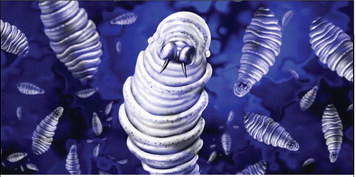
Adobe Stock illustration