.jpg)
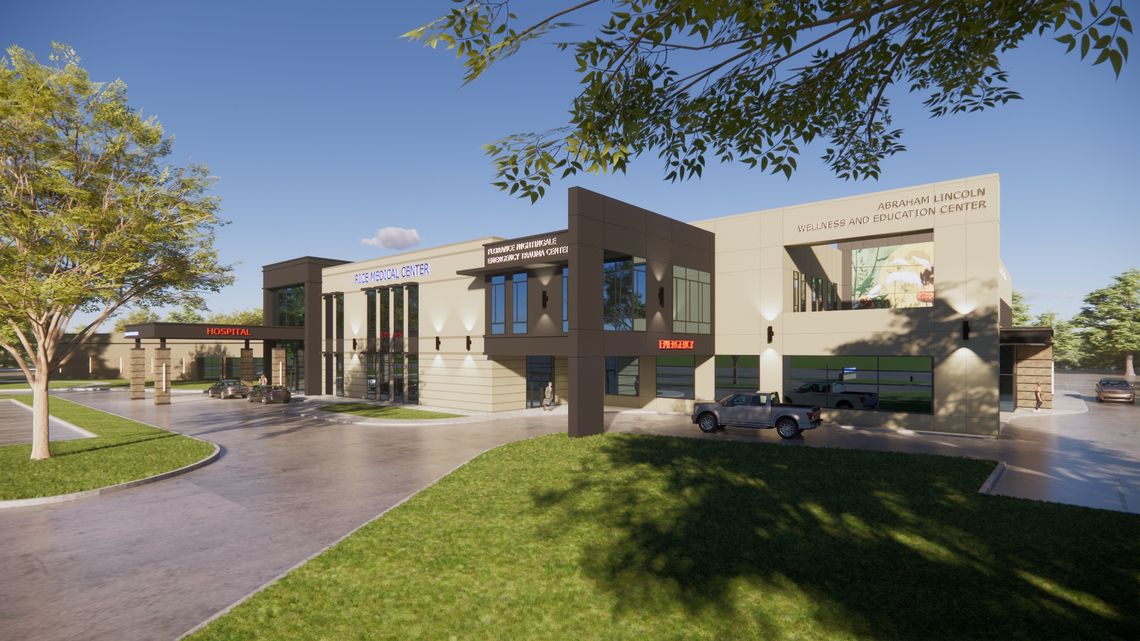
EAGLE LAKE — An expanded emergency department, new rehabilitation and aquatic therapy services and space for additional specialty care are among the improvements planned as Rice Medical Center prepares for a major expansion of its Eagle Lake hospital.
Construction is anticipated to begin in 2026 and take approximately 14 months once underway, according to Rice Medical Center CEO Kurt Sunderman. The hospital will remain fully operational during construction.
Sunderman said the project comes after several years of evaluating patient volumes, infrastructure, available space and the long-term healthcare needs of the communities served by the hospital.
“Rice Medical Center has served this community for more than 80 years, and our existing facility has served us extremely well,” Sunderman said. “However, healthcare has changed significantly since many portions of the hospital were originally constructed.”
RMC has experienced significant growth in inpatient volumes and services in recent years, whi le its emergency department remains one of the hospital’s primary access points for patients. Outpatient rehabilitation services are also operating with limited space.
“This project is not based on one single event,” Sunderman said. “It is the result of several years of evaluating our facility, patient volumes, infrastructure, service needs and the long-term healthcare needs of the communities we serve.”
Emergency, rehabilitation services expand
A new Emergency Trauma Center will provide additional treatment capacity, greater patient privacy, improved workflow for clinical staff and better ambulance access.
Rice Medical Center will remain a Level IV Trauma Center.
“The goal is not simply to build a larger emergency room; it is to create an environment that allows our physicians, nurses and clinical team to provide care more efficiently and effectively,” Sunderman said.
The project will also significantly expand space for physical, occupational and speech therapy.
Aquatic therapy wi ll be new to Rice Medical Center, providing another treatment option for patients recovering from surgery and injuries, as well as those with neurological conditions and other mobility challenges. Plans also include a community fitness component and space for health education, prevention and medically focused wellness programs.
Flexible clinical space is being incorporated into the project to potentially bring additional specialty services to Eagle Lake. Sunderman said RMC is not identifying specific specialists until arrangements are finalized.
The goal, he said, is to create the infrastructure needed for specialists to see patients locally rather than requiring residents to travel to larger metropolitan areas for some services.
Behavioral health services are also part of the hospital’s long-term planning. RMC currently provides outpatient behavioral healthcare, and Sunderman said the expansion will allow those services to be offered in a more appropriate and expanded setting.
$15 million is fundraising goal, not project cost Sunderman also clarified that the $15 million figure represents the goal of its capital campaign — not the total cost of the expansion project.
The overall project represents a significantly larger investment, although Sunderman did not provide a total estimated cost.
The Rice Hospital District owns the hospital facilities and has committed existing resources to the project. Rice Medical Center has launched the $15 million capital campaign, and is pursuing philanthropic contributions, grants and other funding opportunities.
Sunderman went on to say that fundraising remains underway, and gifts and commitments are still being finalized.
The Rice Hospital District may also issue revenue bonds to finance a portion of the project.
According to Sunderman, those bonds would be repaid through non-tax revenue rather than property tax revenue. Rice Medical Center, which operates and leases the hospital facilities, would provide revenue to the district through monthly lease payments structured to cover debt obligations associated with the bonds.
“This financing structure allows the District to support a major investment in the hospital facilities without relying on an increase in property taxes to repay the construction debt,” Sunderman said.
Hospital to remain open during construction Construction will be completed in phases because the project combines new construction with renovations and improvements to the existing hospital.
Some departments or services could be temporarily relocated during construction, but Sunderman said maintaining patient access and continuity of care will be a priority.
The expansion is also expected to play a role in RMC’s efforts to recruit and retain physicians and other healthcare professionals.
Rural hospitals compete with larger healthcare systems for physicians, nurses, therapists, imaging professionals and other clinical staff, Sunderman said, and modern facilities and technology can aid those recruitment efforts.
It is too early to estimate the number of construction jobs or permanent hospital positions that could result from the expansion. Those numbers will depend on the contractor, future patient volumes and services ultimately developed.
For Sunderman, however, the larger impact of the project is increasing the amount of healthcare that can be provided locally.
“We will never replace the Texas Medical Center or other tertiary hospitals, nor should we try,” Sunderman said. “There will always be highly specialized services that require transfer to a larger facility.”
Instead, he said RMC’s responsibility is to determine which services can safely and effectively be provided locally and continue expanding those capabilities.
“Every service we can appropriately provide locally means one less reason for a patient or family to spend hours traveling to Houston, Katy or another metropolitan area for care,” Sunderman said.
The expansion is being designed not only around current needs but with enough flexibility to accommodate future changes in healthcare and the needs of the communities RMC serves.
“For more than 80 years, generations of families have depended on Rice Medical Center,” Sunderman said. “This project is about making sure the next generation has that same opportunity.”