.jpg)
GHOSTS OF COLORADO COUNTY
Along FM 109 between Columbus and Frelsburg, an old, abandoned house continues to capture the imaginations of the people who pass it.
Weathered by time and surrounded by the rural landscape of northern Colorado County, the two-story structure has inspired ghost stories, local legends and plenty of speculation about what — or who — might remain inside.
Whether any ghosts actually haunt the old house is a matter of folklore.
The history surrounding it, however, is real — and some of it is every bit as dramatic as the legends.
A COMMUNITY NEARLY LOST TO TIME According to the Texas State Historical Association, German pioneers Frederick and Margaret Zimmerscheidt arrived in what is now Colorado County in the early 1830s and settled on land that would eventually bear the family name. The land is about eight miles north of Columbus.
Getting legal title to that land proved considerably more complicated.
Research by the late Bill Stein, now housed at the Nesbitt Memorial Library, chronicles years of legal battles involving Frederick Zimmerscheidt’s claim. He finally received title to his land in February 1846, more than a decade after he had begun living there.
But his disputes over land were hardly the only trouble in the Zimmerscheidt household.
TROUBLE ON THE HOMESTEAD In 1848, Margaret Zimmerscheidt took an extraordinary step for a woman at the time: She filed for divorce.
Historical accounts of her petition paint a grim picture of life inside the household. Margaret accused Frederick of heavy drinking, wasting family property, and physical abuse. In one incident described in the petition, she said Frederick struck her with an ax, injuring her hand and leaving her permanently disabled.
Money and property were central to the dispute as well. Margaret feared Frederick’s actions would leave the family financially ruined.
Divorce was uncommon and difficult for women in mid-19th century Texas, and Margaret ultimately did not pursue the case to its conclusion. After Frederick agreed to place much of the family’s property under the control of relatives, providing greater financial security for the family, she dropped the suit and remained in the marriage.
Years later, after Frederick’s death, Margaret wrote bitterly about the strain the dispute had placed on her relationship with members of her family.
A GROWING GERMAN SETTLEMENT Despite Frederick’s legal troubles and the turmoil within the family, the settlement around Zimmerscheidt continued to grow.
The Zimmerscheidts and other landowners sold farms to fellow German- speaki ng immi grants, helping establish a growing German community in northern Colorado County during the mid-1800s. By 1850, more than one-third of Colorado County’s free White residents had been born in Germany.
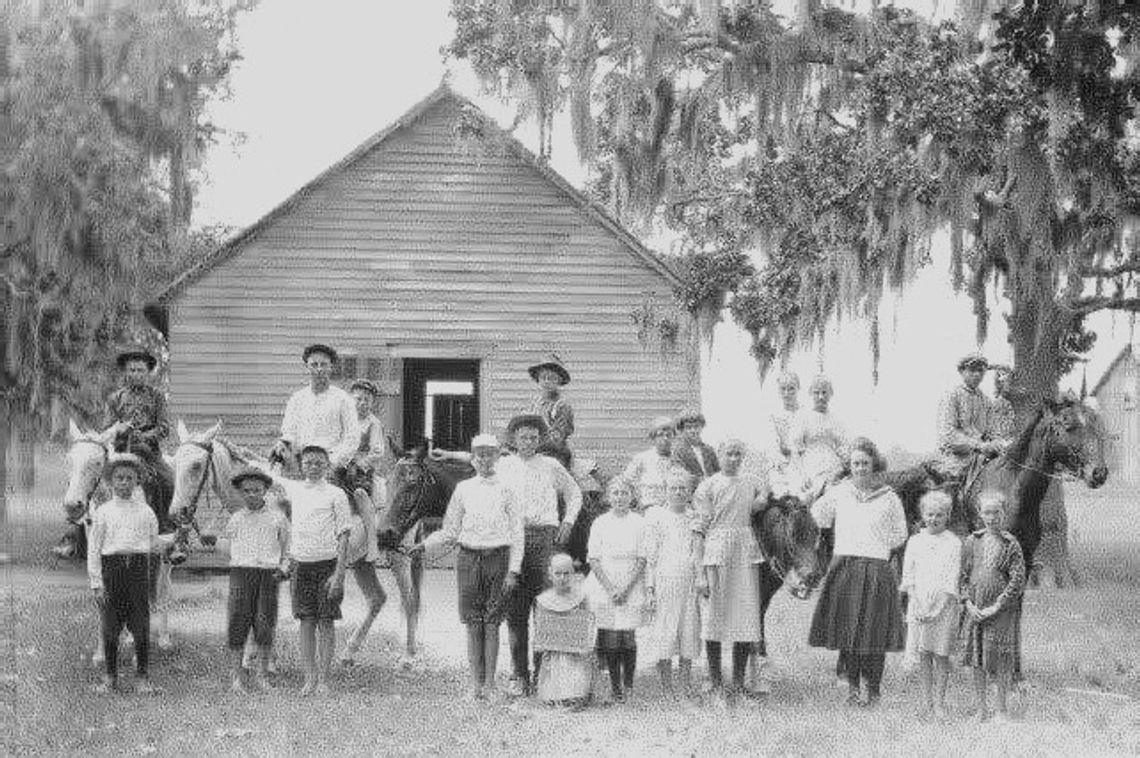
The community eventually had its own school. Frederick donated an acre of land for a school in 1855, and a school later served area families until it was consolidated with Columbus Independent School District in 1948.
Frederick died in 1856 and was buried near his home, establishing what became the Zimmerscheidt- Leyendecker Cemetery. Margaret died in 1861 and was buried beside him.
Even the cemetery has its own bit of folklore. According to family legend preserved in local cemetery records, it was established at a spot where Frederick once shot a bear.
The community never entirely disappeared. Zimmerscheidt continued to appear on maps into the late 20th century, and the Texas State Historical Association records a population of 50 in the early 2000s.
HISTORY, FOLKLORE _ AND AN OLD HOUSE
Today, little remains to tell passing motorists that this quiet stretch of Colorado County was once home to generations of families whose lives included immigration, settlement, land disputes, family turmoil and the building of a new community.
That history may be part of what gives the abandoned house its mystique.
Stories about the structure have ci rculated among local residents and travelers for years, with the aging house becoming the subject of ghost tales and local lore.
But separating documented history from legend is difficult.
Historical records indicate Frederick Zimmerscheidt’s original log home was still standing during the 1960s, but available historical sources do not establish that the abandoned two-story house associated with today’s ghost stories was his home.
So, is the old house haunted?
History doesn’t answer that question.
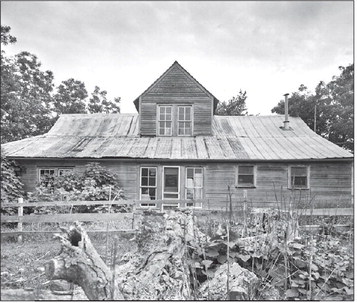
Yancey, Michael D. [Zimmerscheidt-Leyendecker House, (North elevation)], photograph, May 1977; (https://texashistory.unt.edu/ark:/67531/metapth682118/m1/1/: accessed September 27, 2026), University of North Texas Libraries, The Portal to Texas History, https://texashistory.unt. edu; crediting Texas Historical Commission.