Some ghost towns leave behind abandoned buildings, old cemeteries or weathered signs marking the place where a community once stood.
Judyville barely left behind its name.
Known variously through the years as Judyville, Judaville, Juniorville and Jewittville, the small community in southwestern Colorado County had its beginnings during Reconstruction, when 18 formerly enslaved people were given an opportunity that remained exceedingly rare in the years immediately following the Civil War — ownership of their own land.
And then, much of their story seemingly disappeared from the historical record.
A COMMUNITY CREATED IN 1869
According to historian Bill Stein’s Consider the Lily: The Ungilded History of Colorado County, published by the Nesbitt Memorial Library, the community began with Swen — or Swante — Magnus Swenson, an early Texas merchant, landowner and slave owner.
Swenson, whose anti-secessionist views drove him from Texas during the Civil War, had acquired numerous land certificates during his years as a merchant in Austin.
In 1861, he was granted approximately 1,420 acres in southwestern Colorado County through a land certificate he had acquired from Thomas J. Smith.
On Dec. 24, 1869, Swenson divided a portion of that land into 19 tracts.
Eighteen were 40-acre parcels. Each was conveyed to a formerly enslaved person.
The 19th tract, consisting of 20 acres in the center of the new community, was set aside for another purpose. Each of the 18 landowners was authorized to select a half-acre homesite from the central tract, while the remaining land was intended for a church and school.
Eleven of the 18 people who received land adopted Swenson’s surname.
One week later, Mary Johnson — one of the recipients who did not take the Swenson name — purchased the remaining 680 acres of the survey from Swenson for $300.
For a group of Black Texans emerging from slavery only a few years earlier, the arrangement represented an extraordinary opportunity to own land and establish a community of their own.
THE MYSTERIES
What happened next isn’t nearly as clear.
In his book, Stein noted that the community apparently never developed as its founder envisioned. There is no evidence that the planned church or school was ever built, and there may have been few, if any, houses constructed there.
Even its name is something of a mystery.
The informal name given to the settlement apparently never appeared in the hundreds of land transactions involving the property recorded at the Colorado County courthouse.
Instead, the name survived in several forms — Judyville, Judaville, Juniorville and Jewittville.
Stein suggested that if “Judyville” was the original version, it may have come from Judy Swenson, one of the original 18 people who received land.
But that isn’t the only unanswered question.
Swenson was living in New York when he established the community. In the deeds, he specified that the recipients were Black and had rendered “faithful services.”
Presumably those services had been rendered to Swenson, Stein wrote — but the deeds don’t actually say that.
Adding to the mystery, Swenson was not known to have owned enslaved people for approximately 20 years before the 1869 land transfers.
And then there is perhaps the strangest gap in the record.
Despite receiving the property in 1869, none of the people who received the land appear to have been recorded in either the 1870 federal census of Texas or the 1870 Colorado County tax rolls, according to Stein’s research.
Where they were — and why they don’t appear in those records — remains unclear.
A COMMUNITY THAT FADED AWAY
At least some of the original recipients apparently held onto their property for years.
On June 30, 1874, three of the original landowners transferred their 40acre tracts to two men in exchange for legal services provided on behalf of Leonard Robinson, who had five criminal indictments pending against him.
The others appear to have retained their property considerably longer.
But the community Swenson envisioned never became a lasting town.
There was no Judyville incorporated into Colorado County. Its informal name wasn’t preserved in the courthouse deeds documenting the very land upon which it existed. Even the exact origin of that name remains uncertain.
What remains is an unusual chapter of Reconstruction- era Colorado County history: 18 formerly enslaved people, hundreds of acres of land, plans for homes, a church and a school — and a community whose story largely slipped from the historical record.
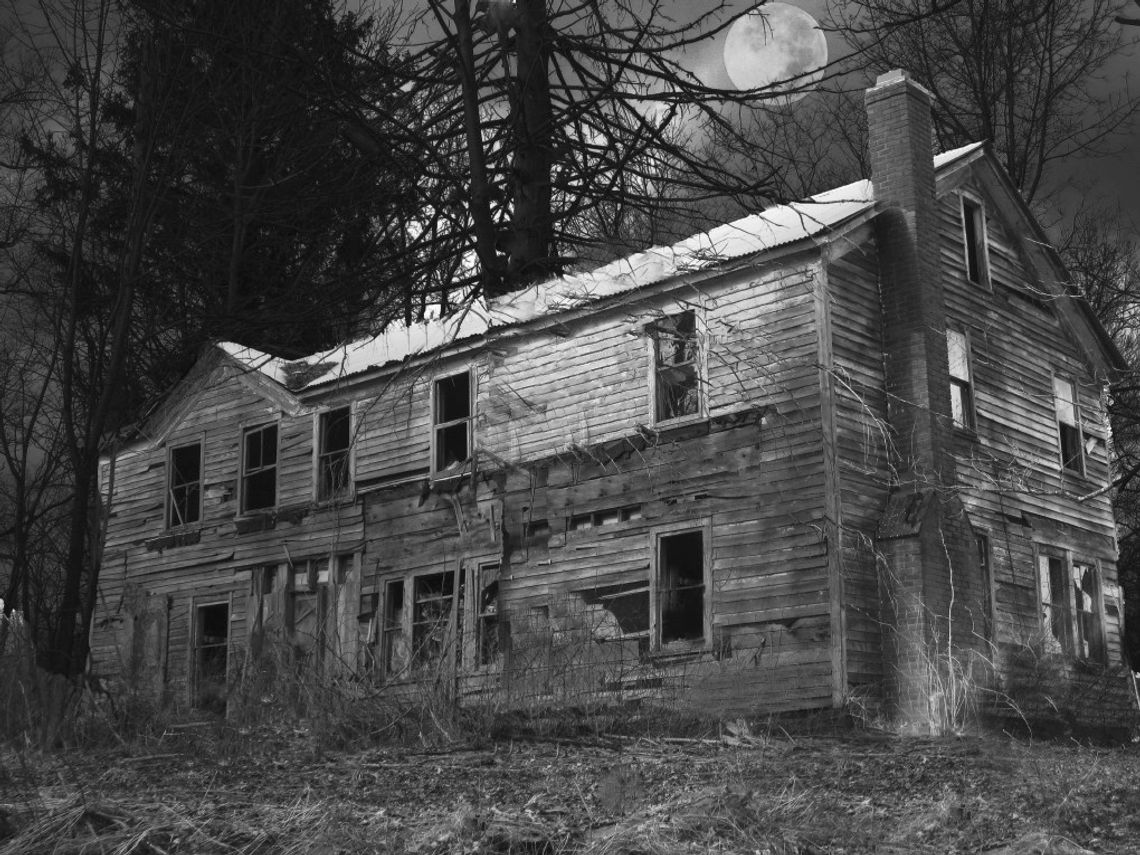
Unlike some of the places featured in Ghosts of Colorado County, Judyville doesn’t need an abandoned house, historic building or ghost story to qual i fy as a place haunted by the past.
The mystery is that we know it was there.
We just know remarkably little about what happened after it began.